
Technology
How the Jetpatcher process works
A Jetpatcher Unit uses compressed air, bitumen emulsion and aggregate in four stages to repair road surface defects. Follow the process below, from preparation to the finished surface.
The four stages
Each diagram shows a cross-section of a defect in the road surface as the repair progresses.
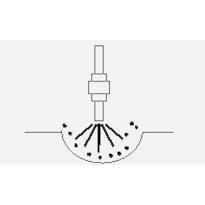
Step 1: Prepare
Air removes loose debris and prepares the affected area.
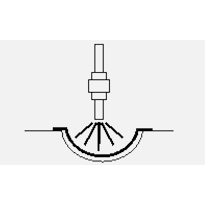
Step 2: Coat
Bitumen emulsion coats the prepared base and surrounding area.
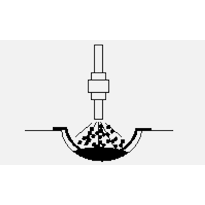
Step 3: Fill
Aggregate is coated with emulsion at the delivery point and introduced using air, building up from the bottom.
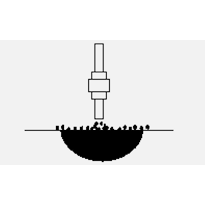
Step 4: Finish
A final sealing treatment and light dry aggregate help reduce adhesion to tyres while the emulsion cures.
Filling from the bottom up
In the fill stage, coated aggregate is delivered with air. Air pressure helps compact the material as the repair is built up from the base of the defect.
Finishing the surface
A final sealing treatment and a light layer of dry aggregate help reduce the repair sticking to tyres while the emulsion cures.
Materials
Compressed air
Used to clear loose debris and dust from the repair area, and to carry coated aggregate into it.
Bitumen emulsion
A mixture of bitumen and water that binds the aggregate and bonds the repair to the surrounding surface. It cures as the water separates and evaporates.
Aggregate
Crushed stone that forms the body of the repair. It is coated with emulsion as it leaves the delivery nozzle.
Specific emulsion grades and aggregate sizes depend on the application and are discussed with the team.
Suitability and limitations
Not every road defect needs the same treatment. The process repairs the surface; it does not correct weakness in the layers beneath, poor drainage or other structural causes. Where those are present, a surface repair may not last and other work may be needed.
How a repair performs, and when it can carry traffic, depends on conditions on the day and on site.
What affects a repair
- The type, size and depth of the defect
- The condition of the layers beneath the surface
- Drainage and water on or near the road
- Traffic volumes and loads
- Weather and temperature during and after the repair
- Material selection and operator practice
Demonstration video
The existing Jetpatcher demonstration video is hosted on YouTube. If you cannot watch it, the four stages described above give the same overview in text.
Watch on YouTube (opens in a new tab)